The Advancements Of Civil Engineering In Building Integrated Photovoltaics

Technology has been making progress in all sectors of the economy, and the construction industry is not lagging behind. Technological advancements are opening up new possibilities to build more efficiently and faster with reduced costs. These advancements range from small handheld mobile devices to giant machines, software, and many more.
This article discusses the various technological advancements in the construction industry, their benefits, and what the future holds.
Advantages of technological advancements in construction
1) Increased accuracy in construction: With the help of 3D printers, GPS units, and laser-levelled equipment, the construction industry can build with much more precision and accuracy than ever before. This technology ensures that structures are straight and levelled, improving the quality and durability of the buildings.
2) Improved safety: The use of drones and robots in construction allows for dangerous jobs to be done without putting humans in harm's way. The use of technology also ensures that workers adhere to the strict safety regulations put in place, reducing the risk of construction accidents.
3) Time and cost savings: Traditional construction methods require significant manpower and time, which translates to high labour costs. However, the use of technology such as building information modeling (BIM) tools and prefabrication allows for faster construction times and cost savings. BIM software helps to plan, design, and manage the construction process, reduce waste and errors, and allows for early detection of problems before construction begins, resulting in reduced costs.
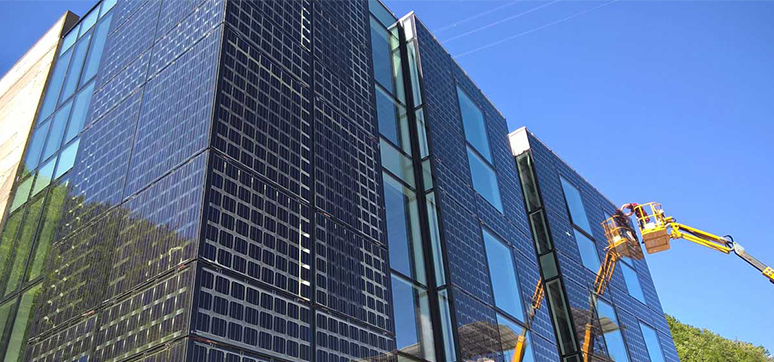
4) Sustainable construction: Sustainable construction methods such as green building designs and energy-efficient materials are being used to reduce the carbon footprint and preserve the environment. These methods have been made possible by the use of advanced technologies such as solar power, electricity storage, and other renewable sources of energy.
Frequently Asked Questions
1) How has technology changed the construction industry?
Technology has changed the construction industry in many ways. It has made it possible to build more precisely and efficiently, reducing construction costs and time while improving the quality of the buildings. There is also improved safety in construction sites, and sustainable building practices have been adopted to ensure environmental protection.
2) What are the types of technologies used in construction?
The types of technologies used in construction include:
- 3D Printing
- Virtual and Augmented Reality
- Building Information Modelling (BIM)
- GPS and Laser-guided Machines
- Sensors and Internet of Things (IoT)
- Robotics and Automation
- Drones and Unmanned Aerial Vehicles (UAVs)
- Mobile Devices and Cloud Computing
3) How does technology improve construction safety?
Technology improves construction safety by reducing the need for human intervention in dangerous tasks. For instance, drones and robots can be used to carry out site inspections and surveys without exposing construction workers to risk. Also, software can help site managers to monitor safety compliance in real-time and detect hazards that might be missed during physical inspections.
4) What is green building design?
Green building design is an environmentally conscious construction method that seeks to minimize the impact of building on the environment by reducing waste, conserving energy and water resources, promoting sustainability, and improving indoor air quality. Green building design incorporates the use of technology such as solar panels, geothermal systems, energy-efficient lighting, and smart ventilation systems, among others.
5) What is prefabrication in construction?
Prefabrication, also known as off-site construction, is a construction technique where components of buildings are constructed off-site and then assembled on-site. Prefabrication reduces the time required for construction and improves the quality of the final product by allowing for more customized assembly. Prefabrication is made possible by technological advancements such as BIM software, CNC machines and robots, and 3D printing.
Conclusion
The construction industry is rapidly adopting technological advancements, and this has brought about significant improvements. Technology has made it easier, faster, and safer to construct buildings, resulting in reduced costs and improved quality. Sustainable building practices have also been adopted, ensuring environmental protection. With the rate at which technology is advancing, we can only expect more exciting innovations in the construction industry in the future.
Post a Comment for "The Advancements Of Civil Engineering In Building Integrated Photovoltaics"